The job that prevents the rest
Septic Tank Pumping
Regular pumping is the one job that keeps every other, more expensive job off your plate. It's routine work, and on the coast it's often needed sooner than people expect.
Why a coast tank fills faster than the calendar says it should
Most guidance says every three to five years, but that number moves with how many people are in the house and how much water actually runs through the system. Heavy rain doesn't help either. A high water table near the coast means the ground around a tank can already be holding water before a storm even starts, and that slows how fast solids settle and how the tank drains down. If nobody can remember the last time it was pumped, that's usually the answer right there. Some tanks on older properties have gone decades without service because the lid got grassed over and lost, and that's a normal call to make, not an unusual one.
What actually happens on the day
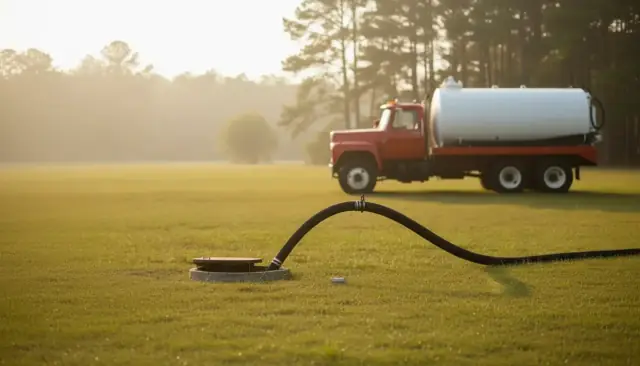
The lid gets probed for and found first, since plenty of coast properties have it buried under turf that's grown over for years. Once it's open, a hose runs from the tank to the truck, the tank gets drawn down and cleaned out, and the lid and the grass go back where they came from. One customer's tank hadn't been touched in twenty four years and nobody in the house knew where it was. It was found, pumped, and covered back up inside two hours, with the yard left looking untouched.
Gulf Coast Septic runs the phone around the clock Monday through Friday, and same day pump outs are common. Licensed, bonded and insured. Call (228) 872-4449.
Signs it's due, not just a guess
A slow drain in every room at once is the tank talking, not the plumbing
One slow sink is a sink problem. Every drain in the house running slow at the same time, gurgling when the washer empties, or a patch of grass over the field line that stays wet or greener than the rest of the yard, that's the tank telling you it's full or the field line is struggling to keep up. Catching it at pumping stage is a routine visit. Waiting past that point is how a routine job turns into a full tank replacement or a new field line. See the rest of what gets handled on the services page.