Nobody Knows Where the Septic Tank Is. Now What?
It happens more than homeowners think, and it's a lot less dramatic to fix than it sounds.
August 26, 2026 · 3 min read
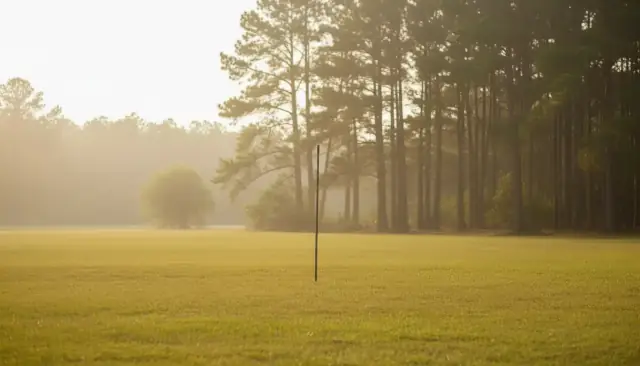
It comes up more than you'd guess. A house changes hands two or three times, the person who buried the tank thirty years ago is long gone, and somewhere along the way the lid ends up under four inches of turf with nothing above ground marking where it is. The current owner knows they have a septic system because there's no city sewer line running to the street. They just don't know where the tank sits, and there's no manual in a kitchen drawer to tell them.
How a lid actually disappears
It's rarely dramatic. Grass grows over the riser a little more each year until it's flush with the lawn. Somebody re-sods at some point and doesn't think to work around it. A shed goes up nearby, or a fence line shifts, and the visual landmarks people used to navigate by are simply gone. None of it happens on purpose. It's just years of small, ordinary yard changes stacking up until the lid is invisible from the surface.
Old paperwork sometimes helps and sometimes doesn't. A county permit record or an original installation sketch, if either survived, can point roughly toward the right side of the yard. Most homeowners don't have either by the time they're asking the question, and that's fine. It just means the search starts from the house itself instead of from a filing cabinet.
Why guessing and digging is the expensive route
The instinct a lot of homeowners have is to start digging where they think the tank probably is, based on where the plumbing exits the house or where the yard looks a little uneven. That approach can work, but it can also mean two or three exploratory holes in a yard you'd rather not tear up, plus the time spent filling them back in when the guess is wrong. On a coastal lot with landscaping, sprinkler lines or a septic-adjacent garden bed, a wrong guess isn't free even if nobody's charging for the digging itself.
What locating a lid actually looks like
The real process starts with the house itself, not the yard. Where the main drain line exits the foundation gives a starting direction, since tanks generally sit a set distance out along that line rather than in some random spot. From there, a probe rod, a length of steel that can be pushed into soft ground to feel for the top of a buried tank, does the actual finding. It's a slow, methodical walk of the likely path rather than a dig-and-hope approach, and it usually narrows a search from an entire yard down to a couple of square feet before a shovel ever comes out.
One customer described a system that, by his own account, hadn't been serviced in twenty four years, and nobody in the house had any idea where the tank was. That's an extreme case, most homes aren't nearly that far gone, but it's a real example of how findable a buried tank still is even after decades with no visible marker. The lid gets located, uncovered, pumped and covered back over, and the yard looks the same as it did that morning.
What to do once it's found
This is the part people skip and shouldn't. Once a lid has been located, it's worth marking it in some low-key way, a small paver, a landscaping stake, even just a note in your phone with rough measurements from a fixed point like the corner of the house. The whole search only has to happen once if somebody writes it down.
- Note the distance and direction from a fixed point, like a house corner
- Take a photo of the uncovered lid before it goes back under turf
- Share the location with anyone else living in or maintaining the house
- Keep the date of the pump-out with it, so the next check has a starting point
If you're in that spot right now, not knowing where your tank is isn't unusual and it isn't something to be embarrassed about. Gulf Coast Septic has been finding tanks like this across Ocean Springs, Biloxi, Gautier, Vancleave and the rest of the coast for more than forty years as a family owned and operated, licensed, bonded and insured company. Free estimates, and the phone is answered 24 hours Monday through Friday, Saturday 8:00 AM to 5:00 PM. Call (228) 872-4449.
Gulf Coast Septic, (228) 872-4449
Call (228) 872-4449More articles
How Often Does a Septic Tank Actually Need Pumping on the Gulf Coast?
The three-to-five-year rule is a decent starting point, but what's happening inside your house changes the real number.
The Signs a Septic System Is Starting to Fail, in the Order You'll Actually Notice Them
Failure rarely arrives all at once. It shows up in stages, and knowing the order can save you the worst one.